Search Results
513 results found with an empty search
- Why America must protect 30x30
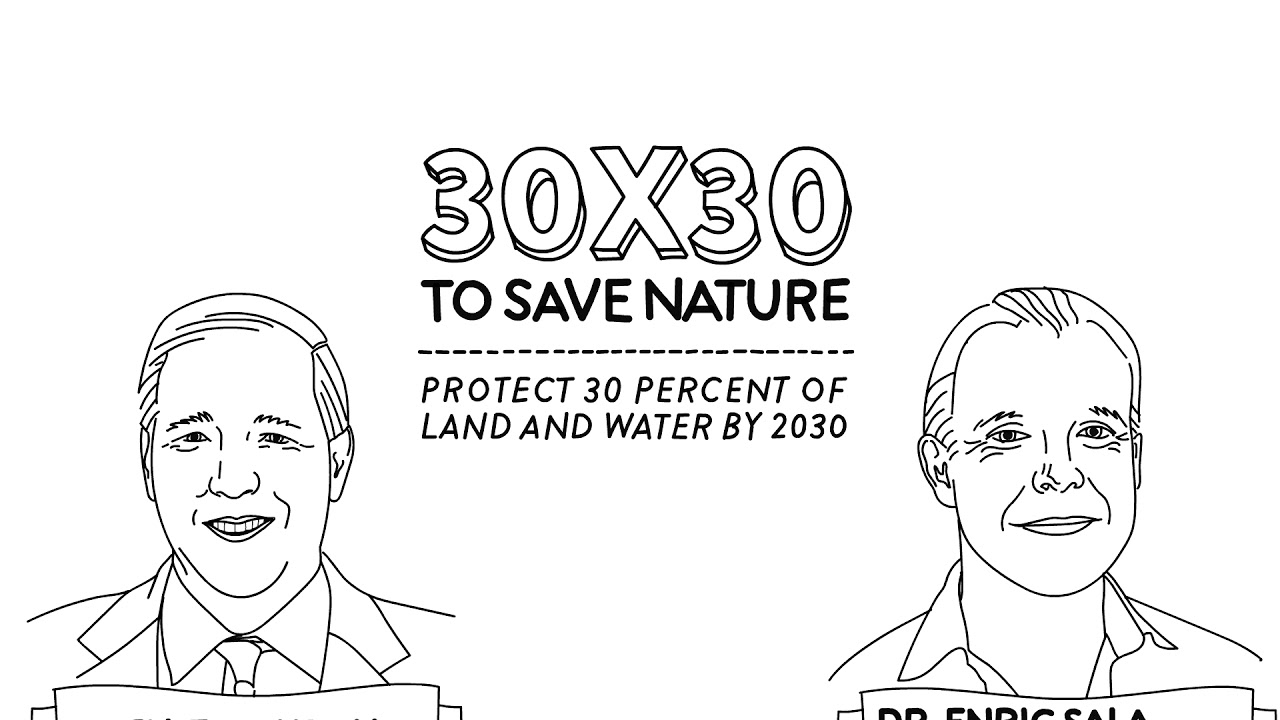
Senator Tom Udall and Dr. Enric Sala explain why Americans must protect 30x30 in this YouTube video. A May 2019 United Nations report says that the world is currently facing an extinction crisis, with over one million species endangered globally. 1,300 species are threatened or endangered in the U.S. today. Some experts estimate that one-third of all species could be extinct by 2070. The U. N. report says this is due to human activities. These culprits are, in descending order: (1) changes in land and sea use (2) direct exploitation of organisms (3) climate change (4) pollution (5) invasive alien species Why does this matter? The Hall of Biodiversity in New York’s American Museum of Natural History notes: “In the past, natural events caused large-scale transformations of the environment and five global mass extinctions. Now, ecosystems are again undergoing a massive loss of biodiversity. This time, the changes are caused mainly by human activity… following the invention of agriculture around 10,000 years ago and the resulting population boom, our impact has intensified.” The world’s five prior extinctions were brought about by a variety of factors including glaciation (Ordovician extinction); global warming and change in ocean chemistry (Permian extinction); asteroid impact (Cretaceous extinction). On January 27, 2021, President Biden signed an Executive Order Tackling the Climate Crisis at Home and Abroad. Section 214 of this order is to “protect America’s natural treasures, increase reforestation, improve access to recreation, and increase resilience to wildfires and storms, referred to as #30 x 30. 450 state and Local officials support this. This matches one of Biden’s campaign promises of “Protecting biodiversity, slowing extinction rates, and helping leverage natural climate solutions by conserving 30% of America’s lands and waters by 2030.”
- Free Food Scraps Drop Off Now at Ashland's Tuesday Market
Have you been looking for a way to reduce your food waste? Now you can drop them off at the Ashland Farmers Market on Tuesdays at the Armory 1420 E Main St., Ashland, OR 9 a.m. to 1:30 p.m. The market opens this Tuesday (March 1, 2022) so start saving those carrot peelings. This is a project of the Ashland Rotary Club, funded by an Ashland Food Coop grant (thanks!) Rogue Produce will pick up the scraps and take them to a local farmer for composting. This is a great way to enrich our soils and foods, to increase water retention in fields, and reduce methane created when food scraps go into the landfill. A list of Do's and Don'ts can be found on Rogue Produce's website, but basically, no meat, bones, or seafood, no paper plates or cutlery even if it says compostable. no coconuts. Tea bags, egg shells, and coffee grinds are OK. #composting #farmersmarket #Ashland
- Take Action for Environmental Justice
Oregon Just Transition Alliance and its member organizations are encouraging Oregon State Legislators to pass three key policies in 2022 to advance environmental, racial, and economic justice in our state: Farmworker Overtime - HB 4002 Farmworkers in Oregon have extremely tough jobs and often work long hours in dangerous conditions. In the past year alone, roughly 80,000 Oregon farmworkers worked to feed families through the pandemic, wildfires, hazardous air quality conditions, and deadly heat waves. Yet farmworkers have been unfairly excluded from overtime pay due to an outdated law that has perpetuated institutional racism in our state and our country for generations. Fair pay is a key step to increasing community resilience as Oregonians face more and more climate crisis-fueled disasters and extreme weather events. Oregon legislators must take action to ensure our field and hand-harvest farmworkers are no longer excluded from overtime laws. Long-term and Emergency Heat Relief - SB 1536 During the record heat wave last year, at least 96 Oregonians died and countless others suffered without access to life-saving cooling devices such as air conditioning or heat pumps in their home. As climate change fuels more extreme weather, it is essential that Oregonians are protected from the deadly impacts of heat waves and storms. Oregonians deserve access to affordable, efficient, and safe heating and cooling during extreme weather events. Health professionals, energy advocates, and environmental justice organizations worked together to craft thoughtful heat relief policies to protect vulnerable Oregonians and build more resilient communities. Environmental Justice Council Mapping - HB 4077 People of color, low-income, and rural and tribal communities have been at the front line of environmental and climate injustice in Oregon. Equitable environmental strategies offer more support, resources, and capacity to communities that carry a bigger burden of environmental problems. Oregon’s Environmental Justice Task Force (EJTF) works to design collaborative, data-driven solutions to environmental threats and inequities in our state. HB 4077 provides the EJTF new tools to help identify patterns of pollution and climate burdens, identify disadvantaged and vulnerable communities, and assess environmental vulnerabilities. #EJTF #Farmworkers #HeatRelief #Mapping
- Permaculture Design Course
Siskiyou Permaculture is offering a Permaculture Design Course (PDC) beginning February 26, 2022 meeting every other weekend until May 8th. It meets in the spacious community room at the Jackson Wellsprings, 2253 OR-99 N, Ashland, OR 97520, allowing for some physical distancing. This 72-hour certificate course is based on a curriculum developed by Australian founders, Bill Mollison and David Holmgren, with lots of local stories and examples from our Southern Oregon bioregions. Instructors Hazel Ward, Melanie Mindlin and Karen Taylor have over 60 years of combined experience teaching, consulting and coaching people on the principles and practices of Permaculture, and are passionate about sharing their knowledge. They will be joined by guest teachers, Lion Waxman, Dan Wahpepah, and Rhianna Simes. Permaculture is a whole systems design philosophy used for the creation of regenerative human habitats and food production systems. It has been applied worldwide at every level, from the inner city to urban and suburban developments, homesteading and agriculture to community planning and national policy. Permaculture offers tangible solutions to the many pressing ecological issues of our time, such as how to sustainably meet the basic needs of food, water, energy, and shelter, how to vitalize our communities and restore our watersheds. It is both a land use ethic and community building movement which strives for the integration of human dwellings, energy systems, micro-climate, horticulture, micro livestock and animals, soils, and water into stable, productive systems. The course price is $800. Register here. #permaculture #sustainability #systemsdesign
- Medford Climate Change Adaptation and Resiliency Plan
On February 10, 2022 Matt Brinkley, AICP CFM Planning Director for the City of Medford, OR presented an informational update to the Climate Change Adaptation and Resiliency Plan (CCARP) to the Mayor and City Council. This study process started two years ago. The 2022 document drafted by staff is "a preliminary evaluation of the climate factors that may impact Medford. The report focuses on city-wide, and in some instances, region-wide vulnerabilities under five key categories: Natural Systems, Economy, Built Environment, Public Health, and Community." Various documents were studied, which indicate that "the Southern Oregon region will become more prone to extreme heat events and drought, ultimately becoming more Mediterranean... This plan focuses on building community resilience through adaptation to changes that are inevitable." The report draws upon the following resources; Fifth Oregon Climate Assessment January 5, 2021 Climate Change and Adaptation in Southwest Oregon Preparing For Climate Change in the Rogue River Basin of Southwest Oregon
- A Paschal Mystery Story for the Third Millennium
March 20th is the first day of Spring (the Spring Solstice and Equinox) – the start of a new season in the annual cycle of blossoming and growth after one of decline and darkness. The Jewish Passover seder is April 15, 2022. Easter is April 17, 2022, with its message of death, resurrection, and renewal. Origins of practices of unleavened bread and paschal lamb had little to do with the notion of substitutionary atonement. *[see note below] The Jesuit’s practical interpretation of Easter is that “new life can come from death; that we can find meaning in tough times; and that there really is light in the darkness.” Richard Rohr interprets the paschal mystery story in a broader Hebrew biblical context as “the pattern of down and up, loss and renewal, enslavement and liberation, exile and return, transformation through darkness…” But Matthew Fox’s interpretation of the pascal mystery story “may be considered the most comprehensive outline of the Christian paradigm shift of our age.” In his 1988 book, The Coming of the Cosmic Christ Fox offers “a paschal mystery story for the third millennium… and for a new era of religious belief” – the crucifixion of Mother Earth; the resurrection of the human psyche by way of an awakened mysticism; and the coming of the Cosmic Christ, ushering in a global renaissance that can heal Mother Earth and save her by changing human hearts and ways. Put in other words, its a pascal mystery story of the divine cycle of death, rebirth, and sending of the Spirit in our time: matricide, mysticism, a new living cosmology. By using the term “cosmology” Fox means three things: A scientific story about the origins of our universe The mysticism that is a psychic response to our being in a universe Art, which translates science and mysticism into images that awakens body, soul, and society “A cosmology needs all three elements to come alive; it is our joyful response (mysticism) to the awesome fact of our being in the universe (science) and our expression of that response by the art of our lives and citizenship (art).” Matthew Fox is offering a “new wineskin with which to grasp and live out the paschal mystery for the third millennium” by proposing that “Mother Earth can be understood as Jesus Christ crucified.” “Uniting mysticism and spiritual development with ethical and prophetic witness, the creation spirituality articulated by Matthew Fox presents an inspiring vision of an alternative Christology. The Cosmic Christ is the incarnation of God in the universe and especially in Mother Earth.” Spring is a season of letting go – “We need to let go of the Enlightenment and its worldview that denies mysticism and lacks a cosmology. We need to let go of a religious worldview that bores the young, trivializes Jesus Christ, and renders our spiritual heritage almost impotent.” Mystical awakening is about the awe, wonder, and “radical amazement” (Rabbi Abraham Heschel’s phrase) and this leads to “a morality of reverence for all creation.” So as we celebrate the Spring Solstice, can we let go; open ourselves to the mystery of all of creation; and embrace a new paradigm of this divine cycle of the coming Cosmic Christ? “The cosmos is fundamentally and primarily living… Christ through his Incarnation, is internal to the world,… rooted in the world, even in the very heart of the tiniest atom… Nothing seems to me more vital, from the point of view of human energy, than the appearance and eventually, the systematic cultivation of such a ‘cosmic sense’.” ~ Teilhard de Chardin *Note: Notker Fuglister argues that “both Passover and matzot were of pre-Israelite origin.” Sacrificial practices associated with the killing of animals for food were widespread in primitive cultures throughout the world. The killing of animals for food is not a trivial thing – its life is somehow related to divinity, hence elevated to worship. “The Passover was originally a rite of shepherds, performed in the night of the full moon at the spring equinox for the protection and well-being of themselves and their flocks… The matzot belonged to the culture of a farming population, who marked the break between old and new at the beginning of the harvest by eating unleavened bread which contained no flour from the crops of the previous year. Hence Passover and matzot were two nature feasts that were “historicized” by the Israelites.” Similarly, the notion of original sin was alien to Judaism, Jesus, and first-century Christianity, but was introduced by Augustine in the 4th century, embraced by Constantine as an effective doctrine to help control citizens in a waining Roman empire, and historicized by the Roman Catholic church." Marcus Borg, in Convictions says “a major historical problem that negates the notion that Jesus’s death as a payment for sin is the only correct understanding is this: it is not central to the first thousand years of Christian belief.” Borg attributes the idea to the archbishop of Canterbury, Anselm in 1098. “It is not part of ancient Christianity and so not part of biblical and traditional Christianity. Tags: Cosmic Christ, Mysticism, Cosmology, MotherEarth, Pashcal Mystery Story, Matthew Fox, Richard Rohr, Marcus Borg Spring, Renewal, Spring Solstice, Easter, Passover
- Women Leading Solutions On The Frontlines Of Climate Change
WECAN International is organizing and hosting Women’s Assembly for Climate Justice: Women Leading Solutions on the Frontlines of Climate Change on Tuesday, September 11, 2018 from 1:00 to 8:30 p.m. at The Green Room (second floor), 401 Van Ness Ave, San Francisco, CA. This event will also be available for allies worldwide via Facebook Livestream. This will be “an extraordinary gathering of women leaders from across the United States and around the world, joined in solidarity to speak out against environmental and social injustice, draw attention to root causes of the climate crisis, and present the diverse array of visions and strategies with which they are working to shape a healthy and equitable world.” “International advocates, grassroots, Indigenous, and frontline women leaders, and policy-makers, will discuss topics including the intersectionality of gender and environment; Indigenous rights; a just transition to renewable energy; women and forest protection and regeneration; fossil fuel resistance efforts; women and agroecology/soils; environmental racism; and women’s leadership and calls for action within a climate justice framework.” This dynamic public Forum is to be presented the day before the Global Climate Action Summit (GCAS) in California. A list of collective key Calls to Action from the Women’s Assembly for Climate Justice will be presented to the leadership of the GCAS the following day. Details and tools to share are available via the WECAN International webpage. Art by Christi Belcourt On Saturday, September 8, 2018, at 10 a.m. Women For Climate Justice Contingents at ‘Rise For Climate, Jobs, Justice‘ will be marching in San Francisco. Rise up and join them to build a fossil-free world.
- The Interconnectedness of All Things
In some circles, science and mysticism are merging. In the 2004 movie What the Bleep Do We Know? fourteen scientists and mystics share their ideas about the interconnectedness of all things. The film is now available streaming on Amazon Prime. Click here to watch the trailer. Although the film has its critics, it does make one think. Here are a few memorable quotes: “Knowing that we are all interconnected in the universe is at its fundamental level as good an explanation of spirituality as there is.” ~ Stuart Hameroff M.D. “It is my belief that our purpose here is to develop our gifts and intentionality and to learn how to be effective creators.” ~ William Tiller, Ph.D. “We are here to be creators. We are here to infiltrate space with ideas and mansions of thought. We are here to make something of this life… We must pursue knowledge without any interference from our addictions. And if we can manifest knowledge and reality in our body, we will experience this in new ways, in new holograms, in new ‘elsewheres of thought’ beyond our wildest dreams.” ~ Ramtha The only answer that is both satisfactory and meaningful is that consciousness is the Ground of all Being. ~ Ramtha “Quantum mechanics allows for the intangible phenomenon – the freedom to be ‘woven into human nature.’ Quantum physics is the physics of possibilities. “There is really no such thing as good or bad… there are things that I do that I know will evolve me and there are other things that will not evolve me.” ~ Micael Ledwith, Ph.D. “Welcome to the kingdom of heaven, without judgment, without hate, without testing, without anything – we simply are.” ~ Ramtha
- Save Our Home
Our friend Jan Magarigal is a local artist, concerned about what humans are doing to our environment, and is a lover of frogs. Her artistic interest is “to create beautiful, gentle and thoughtful designs for all people wanting to help move the world toward a kinder, gentler, compassionate and peaceful world whereby respect and dignity of all is a given, including our relationship with all sentient beings and Earth too.” She has T-shirts, mugs and buttons for sale on her Earth and World Peace website. Jane recently introduced us to a 1st grader named Justin and ForTheLoveOfFrogs.com Jane describes Justin as “a young Jane Goodall – he is destined to be amongst the great environmentalists of the future.” You might enjoy watching Jane’s fun YouTube video or Justin’s inspiring YouTube video.
- An Open-Source Revolution
Brian D McLaren's 2021 book Faith After Doubt sets a framework for understanding faith development in four stages: Simplicity, Complexity, Perplexity, and Harmony. Spirituality is evolving from dualistic to pragmatic, then critical, and ultimately into non-dual thinking, McLaren gives people permission to doubt beliefs made obsolete with new science, scholarship, and an expanding worldview. The book may be particularly helpful for evangelical Christians who have moved from certainty into the deconstruction of traditional beliefs and are "lost in reconstruction," looking for a system that brings integration and harmony. What I find most interesting is the implications for how the Christian religion, particularly in the United States, is likely to evolve in the future. For many years church membership has been in a steady decline with a rise in "nones," particularly among younger generations. Few churches actually aim to help people navigate through their doubts. Faith communities that are quite progressive in their methodology may be rigidly conservative and regressive in their theology. On the other hand faith communities that are progressive in their theology may be rigidly institutional in their methodology - "Big on committees. Big on vestments and keeping the liturgy just so. A little low on action and energy. Really nice people... of my grandparent's generation." The result is that "nones" and those with doubts have fewer places to go to resolve these concerns and just give up on being part of a congregation. Observers have noted that politics has replaced religion in terms of the fervor of beliefs. People are still looking for purpose and belonging, but instead of meeting in building with stained glass windows, people are looking for meaning through podcasts and TED Talks. They are getting together and finding belonging by starting reading groups in living rooms and pub theology groups in bars and restaurants. Instead of attending church "52 times a year," they meet less frequently "for 52 hours" in festivals, retreats, excursions into the wilderness, and conferences. Churches are facing an "open-source revolution." "Doubt prepares the way for a new kind of faith after and with doubt, a humbled and harmonious faith, a faith that expresses itself in love..... "We need churches that are big on action and big on love, but small on beliefs and bureaucracy." ~ Brian McLaren This all reminds me of Living The Questions that I participated in several years. ago. Their curriculum "explores the biblical foundations, theological grounding, and spiritual practices at the heart of Progressive Christianity."
- Vote With Your Wallet
Making the best choice as consumers is not just about price and the quality of the product itself, but also the business practices of the company that makes it. The Better World Shopping Guide which grades companies according to five criteria (human rights, the environment, animal protection, community involvement, and social justice) is now in its 6th edition. They “provide our users with a comprehensive database of over 2,000 companies.” Among the A graded companies are: Tweezerman, Vancity, Wholesome Sweeteners, Wholesoy, Working Assets, Recycline, Seeds Green Print, Straus Family, Straus Family Creamery, Sunrise Banks, SweetRiot, TAP / FILTERED, TerraCycle, TerraPass, Theo, OnePacificCoast, Only Natural Pet Store, Organic Pastures, Organic Prairie, Oxo Brite, Pangea Organics, Peace Coffee, Pete & Gerryâs, Plum Organics, Preserve, Pura Vida, local farmers markets, local vineyards, Lotus Foods, Luna, Wolaverâs, Worldâs Best Eggs, Zhenaâs Gypsy, Zia, Turtle Island, Vegenaise, Vital Choice, Vital Farms, Wikipedia, Wild Pacific, Wild Planet, Wildcatch, Wildwood, Swheat Scoop, Teva, Thanksgiving, The Green Office, The Honest Company, The Keeper, Therafit, Timberland, Tofurkey, Tofurky, Tulsi, Simply Organic, Sjaakâs, Sole Rebels, St. John Family, Steaz, Striped Bass,Weleda, WestSoy, Whole Foods, Woodstock Farms, Working Assets CC, Xerox, Xyliwhite, YouTube, Yves, Zola, Stonyfield Farm, Sun Flour Baking Co, Tender Care, Think, TofuTown, Twin Oaks, Unisoy, Vermont Bread Co., Vermont Soy, Rudiâs Organic, Sheltonâs, Silk Road, Sipp, Small Planet, So Delicious, Speakeasy, Spectrum and Spicely. Those with an F grade are: Chevron-Texaco, Walmart, Kraft Heinz, Exxon-Mobil, Blue Cross/Blue Shield, Verizon, Dow Chemical, Citibank, Nestle, Pfizer, General Electric, General Motors, Zee, Zephyr Hills, Zest, Abbott Laboratories, Koch Industries, Comcast, Monsanto, Ford, Coca-Cola, AT&T, Microsoft, Walgreens, Warner Brothers, Whiskas, Window, Windows Mobile, Winn-Dixie and Wonka. Their research is based on 76 reliable sources (linked) with 30+ years of data. Dr. Ellis Jones is the author of two books and an app is available for free download through the Apple App Store and Google Play Store. The Shopping Guide identifies corporate heroes and villains by-product with a brief list of buying tips and what you need to know. #socialjustice #animalprotection #communityinvolvement #environment #HumanRights
- Walk With Me
The film Walk With Me is about Zen Buddhist Master Thich Nhat Hanh and Plum Village. It is being shown on Saturday, January 27, 2018 at 7 p.m. in the Sanctuary of the Center for Spiritual Living. The film is about a community of Zen Buddhist monks and nuns who have dedicated their lives to mastering the art of mindfulness under the wisdom ways of Thich Nhat Hanh. River Oak Sangha meets Wednesdays from 6:30-8 p.m. in the Meditation Pavilion art Center for Spiritual Living to practice mindfulness in the tradition of Thich Nhat Hanh. They welcome everyone with an interest in mindfulness practice, including first-time visitors and guests. A sangha is a community that supports people in the practice of meditation, ethical living, and the development of wisdom. They aspire to apply mindfulness to everyday life while balancing practice and study. Such a path can decrease suffering, increase happiness and ultimately lead to the natural development of compassion and wisdom. There is no dogma to believe in. Instead, practicing mindfulness with a sangha is an opportunity to explore our own life experiences using the tools of meditation and reflection in the context of a supportive community of fellow practitioners. River Oak Sangha includes Buddhists and non-Buddhists.
- Parliament of the World’s Religions
The 7th Parliament of the World’s Religions was held from November 1-7, 2018, in Toronto, Canada. The theme was The Promise of Inclusion & the Power of Love. The Parliament of the World’s Religions creates the opportunity for people of faith and conscience from around the world to assemble and to hear from wisdom leaders, which in the past have included His Holiness the Dalai Lama, President Nelson Mandela, President Jimmy Carter, and UN Messenger of Peace Dr. Jane Goodall. Over the years more than 50,000 participants from 200 unique spiritual backgrounds have traveled from more than 80 nations around the world to past Parliament conferences, bringing their attention and action together to dialogue, forge solutions and build networks of action. “Open to anyone interested in experiencing a fresh and sometimes boundary-pushing multi-faith encounter, the Parliament leaves a lasting legacy of cooperation in its hosting cities and changes the lives of all who are drawn into attendance— this extends into the spheres that are also represented in the Parliament, including academia, government, media, business, NGO leadership, and grassroots activism.” The world’s oldest and most diverse global interfaith event marks its 125-year anniversary in 2018 by bringing together leaders and followers of more than 200 spiritual and secular traditions to “pursue global understanding, reconciliation, and change” in the world’s most culturally diverse city. More than 12,000 delegates are expected to convene in Toronto later this year. “The Parliament of the World’s Religions is an international, non-sectarian, non-profit organization, established in 1988 to host the 1993 Parliament of the World’s Religions. The international office of the Parliament of the World’s Religions is located in Chicago, Illinois. Its periodic Parliaments and ongoing initiatives cultivate harmony among the world’s religious and spiritual communities and foster engagement with the world and its guiding institutions in order to achieve a just, peaceful, and sustainable world.” Image Credit: Photo of Basilica de Notre Dame, Montreal, Canada by Diego Delso, delso.photo, License CC BY-SA 4.0 via Wikipedia #harmony #sustainableworld #justice #WorldReligions #engegement #peace #interfaith
- Women’s March Anniversary
from: https://www.womensmarch.com On January 21st thousands of women, femmes, and allies came together to celebrate the one-year anniversary of the Women’s March and to launch our collective 2018 Women’s March agenda: #PowerToThePolls. This anniversary event in Las Vegas was the kick off a national voter registration and mobilization tour targeting swing states to register new voters, engage impacted communities, harness our collective energy to advocate for policies and candidates that reflect our values, and collaborate with our partners to elect more women and progressives candidates to office. Where will you be to make your voice heard?
- You Are The Product
Google is getting more aggressive about “helping you make searches faster and get customized experiences in Search, Maps, Now, and other Google products.” This “translates” into monitoring your search activity in order to monetize you – YOU are the product. These are not your friends just trying to be caring, so beware of your privacy settings. Have you noticed ads repeatedly popping up elsewhere on your browser for items you have comparison searched on Google after you clicked several of the convenient picture shopping links? Google’s privacy policy enables the company to share data across a wide variety of services. These embedded services include millions of third-party websites that use Adsense and Analytics. In the summer of 2016, Google quietly dropped its ban on personally-identifiable info in its DoubleClick ad service. You can control your Google Experience and turn off the blue toggle switches to protect your privacy, although you may also lose some functionality you enjoy. If you don’t want push notifications from Google+ you can just say “NO THANKS!” In addition, you should control what information is collected through a Privacy Checkup of what you share on YouTube. Facebook also has Basic Privacy Settings & Tools you should visit and use. Here’s a handy link to Epic.org’s Online Guide to Privacy Resources.
- Brain Power
AARP’s Bulletin has an article about how to Boost Your Brain Power. Here are some key research findings regarding boosting your cognitive reserve: Activity – brisk walking for 40 minutes four times a week, increases blood flow to the regions of the brain shown able to grow new cells. Eat a Mediterranean Diet and maintain good gut bug flora. Mindfulness – pay attention to what you’re doing. Meditation, yoga, a walk in the woods: focus your mind and relax. This may build clearer memories. Unplug and don’t let your smartphone hijack your attention span. Watch your numbers – keep cholesterol and blood pressure numbers in an acceptable range; limit sugars and prevent or treat diabetes. Don’t smoke tobacco. Don’t fall and get a head injury. Prioritize sleep. Learn something new – remain curious and continue to grow as a person. Socialize – Don’t live alone and party with others to avoid depression. Cognitive reserve is “the combination of a person’s innate abilities and the additional brainpower that comes from challenging the mind. Studies show that diverse, mentally stimulating tasks result in more brain cells, more robust connections among those cells, and a greater ability to bypass age- or disease-related trouble spots in the brain. The more you work your mind, the greater your cognitive reserve. And the greater your reserve, the greater your ability to withstand the inevitable challenges of aging.” "Unfortunately, there is no pill or procedure to help you maintain your memories (yet). Forget digital-brain-games and don’t sweat using antiperspirants with aluminum. Vitamin supplements such as E and Ginsing won’t help either and the efficacy of Prevagin is questionable." Check out Brainblogger for the best and worst of Neuroscience and Neurology.
- Localization
Locavesting is “a call to rethink the way we invest so that we support the small businesses that create jobs and healthy, resilient communities.” Just as “Buy Local” campaigns have found that a small shift in purchasing from chains to locally owned enterprises can reap outsized benefits for a community, so, too, can a small shift in our investment dollars. The phrase Locavesting was coined by journalist Amy Cortese in 2008 (and the title of her book published in 2011) to capture the ‘citizen investor’ phenomenon she saw taking hold in the wake of the financial crisis.” The Local Crowd is crowdfunding like Kickstarter, except with a distinct local investment focus. The Local Crowd is a Wyoming, LLC founded on the belief that strong local economies hold the key to a strong national economy. Their model “combines the power of Internet crowdfunding with a strong educational focus designed to increase the knowledge base and sophistication level of rural entrepreneurs and investors in using the Internet to raise money and make investments in local companies.” They offer a “full-service package including locally-based crowdfunding software, consulting and instruction–including webinars, seminars, workshops, retreats, classes (in-person and online), and courses for groups and individuals.” Local Futures, also known as the Economics of Happiness, is a pioneer of the new economy movement, dedicated to the renewal of community, ecological health and local economies worldwide. Local Futures is offering a FREE webinar on Wednesday, November 29, 2017 at 1:00 p.m. PST – a deeper dig by Shaun Chamberlin and Helena Norberg-Hodge into the work of the late Dr. David Fleming, author of Surviving the Future: Culture, Carnival and Capital in the Aftermath of the Market Economy – a different vision for a post-growth society. Register Here. This event is jointly organized by Local Futures and Transition US. Check out DarkOptimism (Shaun Chamberlin’s blog), which “offers a better future for a troubled world… unashamedly positive about what kind of a world humanity could create, and unashamedly realistic about how far we are from creating it today.” This 2 ½ minute YouTube video highlights the benefits of localization. “Now is the time to repair and restore the atrophied social and ecological structures on which most human cultures were built – not only because we miss them dearly, but also as an absolute practical priority, for they are the only basis for a nourishing and cohesive society that might survive the turbulent times to come. This work could become the story of our times, and living it imbues our days with joy and meaning.” #LocalInvesting #LocalFutures #Locavesting #GlobalEconomy #Localization #TheLocalCrowd
- Let’s Talk Climate: Season of Creation
In the YouTube video (above) Rev. Carol Devine, Director of Blessed Tomorrow, interviews Rev. Dr. Margaret Bullitt-Jones about Season of Creation. on EcoAmerica,'s weekly podcast Let’s Talk Climate. They discuss the history and significance of this time period, the many resources available, and how clergy and lay leaders can get involved. In 2000, St. Stephen Lutheran Church in Adelaide, South Australia, celebrated the first Season of Creation. Since then, churches around the world have joined in celebrating Creation and deepening their commitment to climate solutions in the fall of each year. This year the Season is from September 4th to October 2, 2022. Greenfaith is organizing a worldwide campaign called Faiths 4 Climate Justice between October 2nd and November 6, 2022 (the eve of the COP27 climate talks). Download the Action Guide. Additional church climate action resources are found on the Preaching For Gods World website. Rev. Dr. Margaret Bullitt-Jonas is Missioner for Creation Care; Creation Care Advisor for the Episcopal Diocese of Western MA and the Southern Northeast Conference of the United Church of Christ. She writes a blog full of resources at RevivingCreation.org
- Book Review: Honest to Goodness
Honest To Goodness Honest to Goodness (2019) by Martin Prozesky explores what it means to be a Christian when governed by ethical values.” Prozesky is an academic theologian and ethicist who points to “goodness as the reality that drives everything that is noble and lasting valuable in our existence. Goodness itself requires that we make every effort to protect and enhance all that is already good in the world, and to transform all that is not good.” This scholarly book traces the author’s semi-autobiographical “ethical and spiritual odyssey’’ over a span of 50 years in the Episcopal and Anglican tradition. His faith evolved from his early years of conservative Christianity, then gradually adopting more liberal views, and finally ending up embracing progressive Christianity. He found a “new Christian radicalism far closer to Jesus himself and the great spiritual and ethical movement he launched.” Prozesky’s most important contention of the book is: “Supreme goodness is the only true foundation for faith and practice, and everything in Christianity, and every other faith and philosophy, must align with and serve it or lose moral depth, spiritual credibility, and power.” He lists principle facets of goodness: love, truth, justice, respect, generosity, active care for others, freedom without harm, inclusiveness, non-violence, respect for life, tolerance, equal rights for all, gender justice, beauty, open-mindedness, judicious criticality. Love and truth are foundational. Truth-loving includes unfailing respect for factual evidence and logical consistency. Using the norm of “perfect goodness”, Prozesky concludes that “too many of the very influential belief and practices of conservative Christianity prove too flawed to merit continued acceptance. He agrees with John Shelby Spong who “showed us convincingly, as one who knows his Bible backward, that Scripture contains material that is unethical about the environment, women, homosexuality, children, Jews and what he calls ‘certainty’ – the belief that Christianity has a monopoly on religious truth.” As South Africa navigated through apartheid, it became “abundantly clear that Christianity can be shockingly ambivalent about central ethical values like truth and socio-economic justice.” In his loving critique of conservative and liberal Christianity, he laments that “worship and belief are treated as the main business of conservative Christian churches, having priority over ethical practices.” Biblical fundamentalists tend to be inward-looking, in a self-perpetuating way. Religions should be a comprehensive value system first and foremost, rather than belief systems. He slowly evolved into progressive Christianity and a panentheistic understanding of Godhead. The Abrahamic concept of God as a supreme personal being “is simply too restrictive to do justice to a goodness that is too rich and deep to be adequately contained in any of the models and metaphors we may employ.”He now rejects a belief that God could “ordain the ultimate cruelty and injustice of eternal punishment to those who do not embrace Christ as the only savior. To be clear Prozesky, is not suggesting an “embrace of materialistic atheism and the belief that the universe of matter and energy that science studies is the only reality, which makes religious faith in transcendence just a delusion.” He sees the cosmos as the ultimate reality – this isn’t primarily about beliefs, doctrines, and creeds but in goodness, love, and concern for truth. I feel a resonance with Prozesky’s critique of conservative and liberal Christianity. My personal faith journey has evolved from traditional biblical Presbyterianism, prompted by a quest for the historical Jesus and “living the questions” into a progressive understanding. My path includes some of the same scholars he mentions: N. T. Wright, Marcus Borg, John Dominick Crossan, John Shelby Spong and Lloyd Gerring, but added mystic activist Matthew Fox and contemplative Richard Rohr. I appreciate the author’s unique perspective from South Africa and his centering on ethics. It makes me wonder if an ethics-first approach could persuade white evangelical followers of Donald J. Trump to re-evaluate the cognitive dissonance of his personality, temperament, and policies with the core value of goodness. The book is not easy to read because it’s scholarly bent slowly takes the reader through the thought processes of various other scholars to understand nuanced points of agreement and/or disagreement. Concepts are introduced in one chapter and later elucidated in subsequent chapters or Parts. While informative, this style is at times gives more detail than is desired. As such, the book is not easy to skim and get the gist of what is most important. Nevertheless, I recommend the book as it continues to entice me into greater interest in ethics as a unifying focus – more powerful and universal than religion. I was disappointed that for a book of 309 pages there is only one paragraph on the ethics of saving the earth and its inhabitants from the perils of climate change. Martin Prozesky is a research fellow on the faculty of theology and religion at the University of the Free State in South Africa. He studied theology at Rhodes and Oxford Universities and at the former Episcopal Theological School in Cambridge, Massachusetts. He did his doctorate on Friedrich Schleiermacher, and has been a visiting scholar at universities in South Africa, the United States, Trinity College, Oxford, and Australia. He is the author of six books. Honest to Goodness is currently available on Kindle for $2.99 instead of the $38 list print price. Disclosure of Material Connection: I received this book free from the author and/or publisher through the Speakeasy blogging book review network. I was not required to write a positive review. The opinions I have expressed are my own. I am disclosing this in accordance with the Federal Trade Commission’s 16 CFR,Part 255.